The Lost Historic Car
Early Industrial History
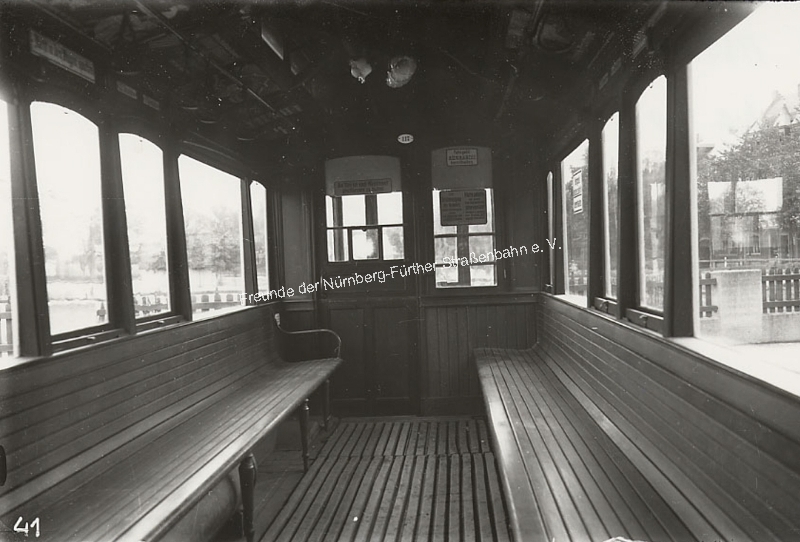
In 1899 and 1900 the Nürnberg-Fürther Straßenbahn aquired a total of 40 small four-axle motor cars from “Maschinenbau-Actiengesellschaft Nürnberg” (later MAN) and "Elektrizitäts-AG vorm. Schuckert& Co." (later part of SSW / Siemens). They were the first electric cars built by these two local companies, which marked the beginning of an almost century-long period of exclusively local built streetcars.
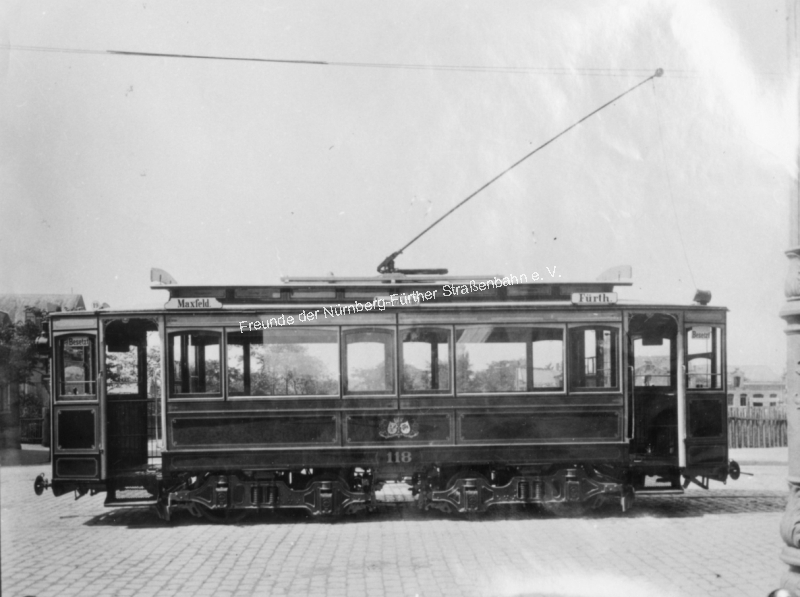
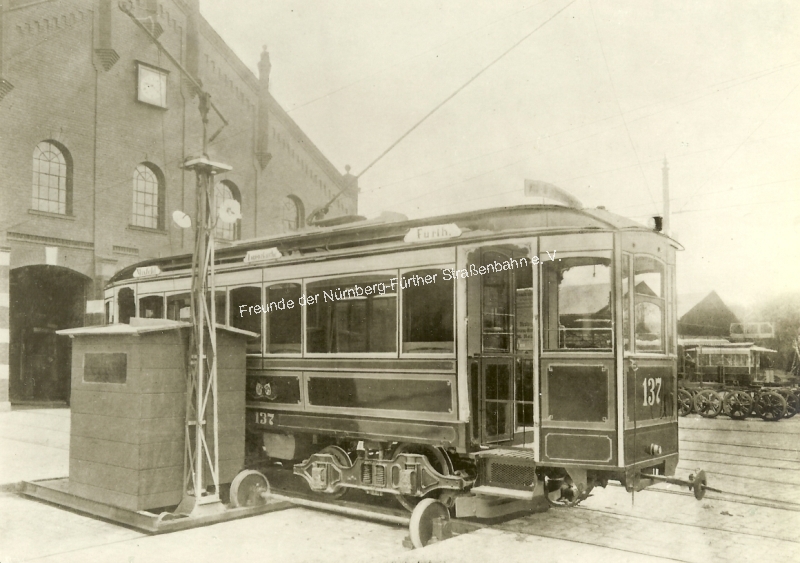
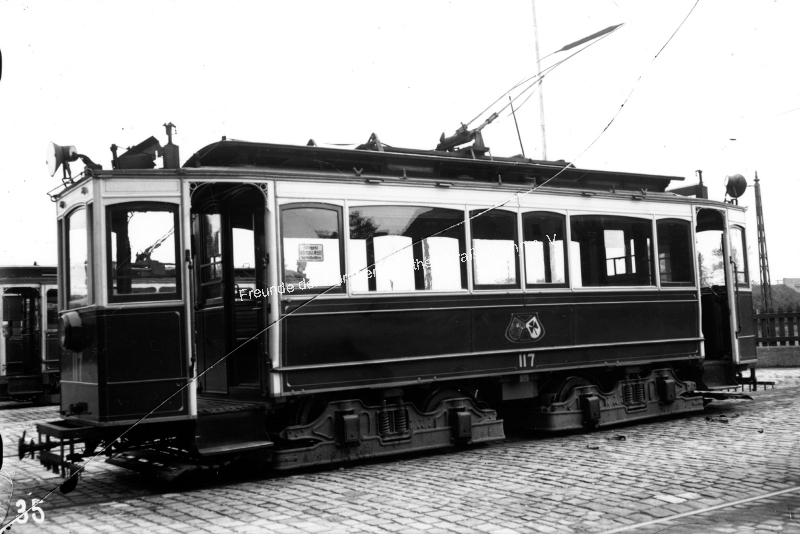
At 8.90 meters long, these cars were only slightly longer than the first electric cars dating back to 1896. The four-axle design allowed them to run through the tight curves dating back to the horse-drawn streetcar era. In total, 40 cars were delivered in two series with only minor differences. The air brake equipment used on the cars of the first series 100-123 (later 101-124) was replaced with an electric brake on the second series (cars 125-140). Also the clerestory roof line was extended forward giving the car its unique appearance also found on later cars in Nuremberg.
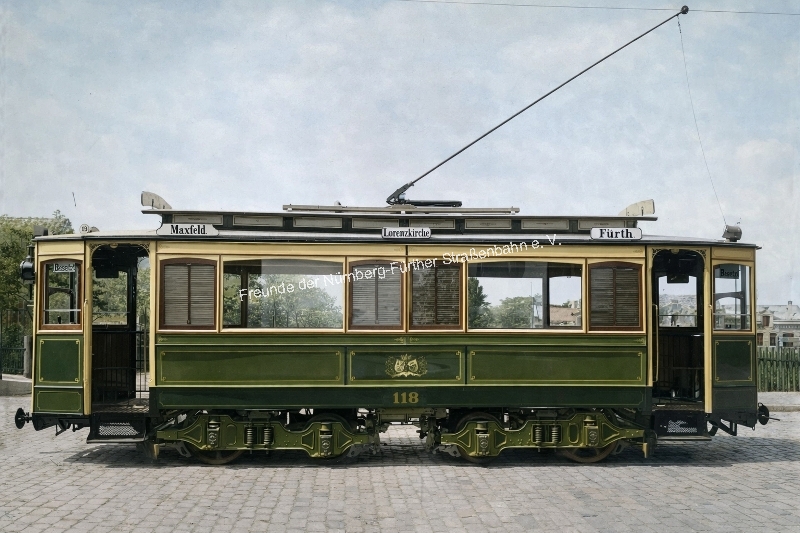 Motor car 118 from the first series of cars with air brake equipment and the flat platform roof. Picture taken on delivery 1899.
(VAG-Archiv, colorized)
Rapid Technological Progress
Initially the cars were used on the lines operating between Nuremberg and Fürth. Due to the rapid advance in technology with more powerful cars, these rather poorly powered cars were quickly relegated to less important services. Rated at only 40 kW with a top speed of around 30 km/h, these cars were not powerful enough to operate with additional non-powered trailer cars
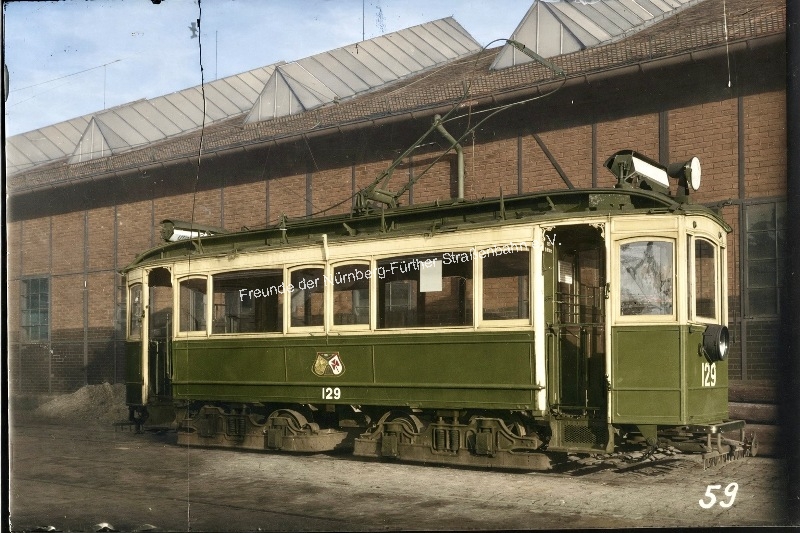 Motor car 129, as it appeared in the late 1920s next to the car shed at the Hauptdepot Fürther Straße.
(VAG-Archiv, colorized)
The Lost Historic Cars"
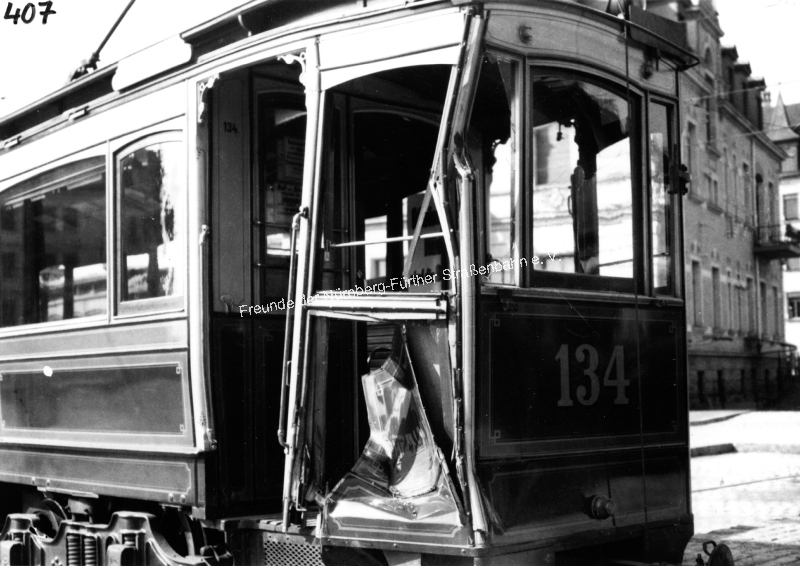
By 1930 all cars had been taken out of service and scrapped as they could not keep up with the requirements in daily operations due to their capacity and low top speed. Following an already established practice to preserve one car of every series, cars 124 (formerly car 100, first built car) and 140 (last car of the series) were stored for historic preservation. After World War 2 ended, the cars were scrapped for parts and materials due to the dire economic situation..
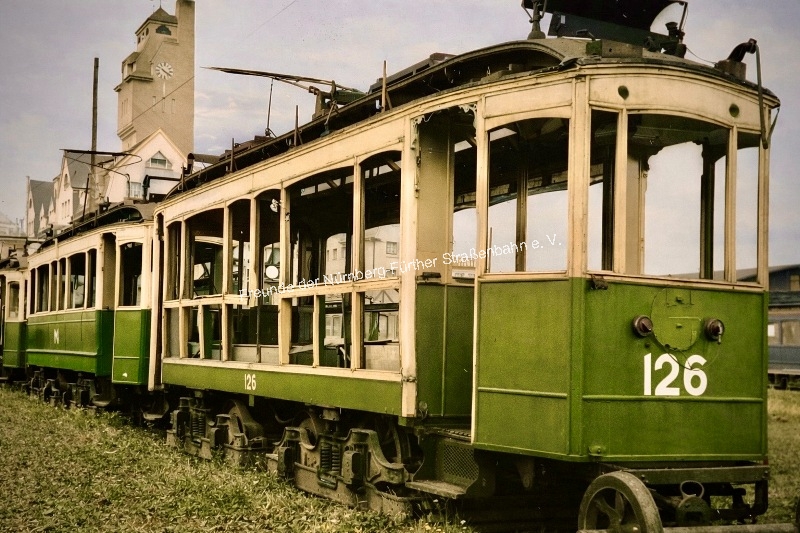 Cars of the 100-series being scrapped on the grounds of the Hauptwerkstätte Muggenhof in 1930. Cars 124 and 140 were preserved but unfortunately scrapped after WW2
(VAG-Archiv, colorized)